Challenges of Fly Fishing for Permit on Coral Reefs
Fly fishing for permit on the open sea is as much a lesson in patience as it is in technical skill. Few saltwater experiences demand the same level of precision, awareness, and restraint. Over coral reefs, where structure is constant and unforgiving, every decision—from fly choice to stripping speed—has consequences that are felt immediately.
Turquoise waters stretch across the flats, interrupted by coral heads and shallow reef systems that define both opportunity and risk. These formations hold life, shelter prey, and consistently attract permit, but they also punish hesitation and poor decisions. In this environment, success in permit fly fishing is shaped as much by what happens below the surface as by what is visible above it. Reading the water alone is not enough; understanding what cannot be seen becomes equally critical.
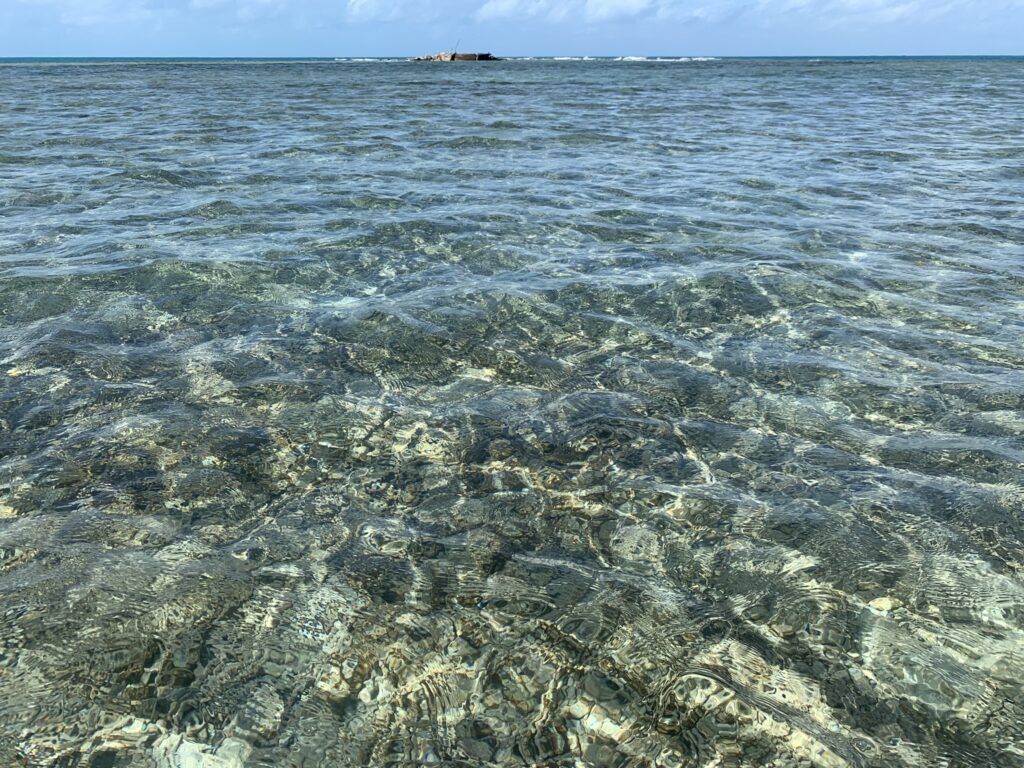
Early attempts often reveal the core challenge. Flies sink too quickly, slipping beneath the reef edge and becoming snagged in coral. The presentation window is narrow. Stripping too fast strips the fly of realism, causing permit to lose interest almost instantly. Stripping too slowly allows the fly to settle, where current and gravity pull it into coral and rock. Fly fishing for permit over coral reefs becomes a balancing act between realism and survival.
The problem is not simply technical — it is environmental. Coral reefs demand adaptation. Observation becomes essential: watching how bait moves, how current flows across structure, and how permit respond to subtle changes in speed and angle. Over time, it becomes clear that traditional sinking patterns are poorly suited for this technical terrain.
The solution emerges through subtle adjustment rather than force. Crab-pattern flies replace heavier, bottom-oriented patterns. Crabs are a primary food source for permit, and more importantly, their natural behavior aligns with the demands of reef fishing. When threatened, crabs move upward and outward rather than digging down. This behavior keeps the fly higher in the water column, reducing snags while maintaining a believable profile.
Crab patterns also offer control. They allow for short, deliberate strips that mimic escape without excess speed. In saltwater fly fishing for permit, this subtle movement often proves more effective than aggressive retrieves. The fly stays visible, the line stays clear, and the fish remains engaged.
The change in approach produces immediate feedback. Permit begin to track the fly, following its movement across open lanes between coral heads. The water comes alive with intention. At this stage, success is no longer about casting distance or power—it is about timing, restraint, and reading the fish. Fishing coral reefs for permit reinforces a broader truth about fly fishing as a whole: progress comes from alignment with the environment, not resistance to it. Coral, current, light, and behavior all impose constraints that cannot be ignored or overpowered. Patience, observation, and adaptation become the defining tools. Each cast becomes part of a larger dialogue between structure, movement, and response.
By the end of the day, fly fishing for permit offers more than the pursuit of a notoriously challenging species. It sharpens awareness, deepens respect for the marine ecosystem, and highlights the quiet satisfaction that comes from solving problems shaped by nature rather than force. Over coral reefs, where margins are thin and mistakes are immediate, fly fishing becomes a study in balance—between movement and stillness, persistence and restraint, challenge and discovery.
If this way of fishing and exploring resonates, we invite you to cruise through our different offers and collaborations by visiting Our Connections, where these experiences take shape through the people, places, and waters that define our approach.
untitled_ | your own definition of wild_